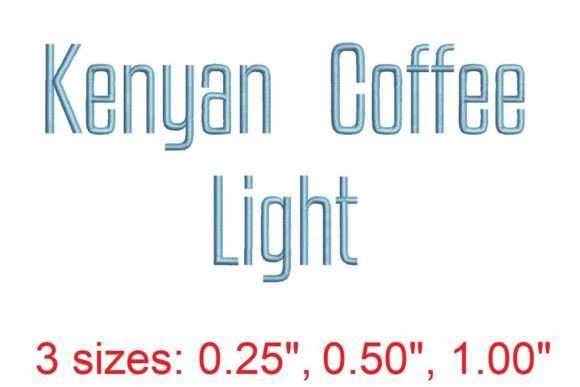
Kenyan Coffee LT Embroidery Font: Elegance Meets Practicality
A First Impression That Speaks Volumes
Kenyan Coffee LT Embroidery Font immediately strikes a balance between refined elegance and everyday usability. As a designer who reviews dozens of embroidery fonts each season, this one stands out for its soft curves, balanced spacing, and a slightly vintage yet modern feel. It’s not overly ornate, which makes it versatile for a range of projects—from personalized baby clothes to boutique tote bags.
The font has a warm, approachable personality. It doesn’t scream luxury in a way that feels forced; instead, it whispers sophistication with a handcrafted charm. That makes it ideal for small business owners and Etsy sellers looking to elevate their product presentation without overwhelming the design space.
Real-World Use: From Sweatshirts to School Tote Bags
I recently tested Kenyan Coffee LT on a custom embroidered tote bag for a client’s boutique back-to-school line. The goal was to add a subtle yet professional touch to each bag with a name or short quote. The font stitched out cleanly on medium-weight cotton canvas, with no distortion or thread bunching. Even at a 1-inch height, the letters remained legible and well-defined.
When I used it on a child’s sweatshirt for a personalized gift order, the result was just as satisfying. The font’s moderate stroke thickness held up well on the slightly textured fabric, and the satin stitches maintained a smooth edge without fraying. It gave the garment a boutique-level finish without requiring extra stabilizer or thread adjustments.
Where It Shines—and Where to Be Cautious
Kenyan Coffee LT Embroidery Font performs best on stable, smooth fabrics like cotton, linen, and tightly woven blends. It works beautifully for embroidered patches, pillow covers, and tea towels, where clarity and readability are key. Its clean structure also makes it a strong contender for holiday gifts, baby items, and wedding favors where a soft, elegant font is preferred.
However, caution is needed when working with stretchy or thin fabrics. On a lightweight jersey knit, the font’s thinner strokes started to pull slightly, especially around the curves of letters like “S” and “C.” For such materials, I recommend using a lightweight cutaway stabilizer and testing on a scrap piece first.
Also, while the font scales down decently, going below 0.75 inches starts to compromise detail. If you're embroidering initials on a baby onesie or a tiny label on a handmade apron, consider using a simpler font or increasing the size slightly for better clarity.
How It Impacts Design and Sales
From a visual appeal standpoint, Kenyan Coffee LT adds a quiet confidence to any product. It reads as high-quality without being too formal, which makes it great for small shop owners looking to build trust with buyers. When I used it on a set of personalized kitchen towels for an Etsy listing, the font helped elevate the product from “crafty” to “curated,” which translated into higher engagement and more repeat customers.
For commercial embroidery projects, especially those involving boutique branding or custom apparel, this font helps maintain a consistent, professional look across multiple items. It’s also a good choice for digital product sellers offering printable mockups—its legibility and clean lines render well in both black and white and color mockup templates.
Practical Notes for Embroidery Designers
Here are a few real-world tips I’ve picked up while working with Kenyan Coffee LT Embroidery Font:
- Test on scrap fabric first, especially if you’re using a textured or stretchy material.
- Check thread color contrast carefully—light gray or pastel threads may not show up as clearly on darker backgrounds.
- Review stitch density, particularly in curved letters, to avoid puckering on delicate fabrics.
- Confirm hoop size compatibility before starting a large run, especially for multi-line text.
- Inspect small details under magnification if you're stitching at a reduced size.
- Test it in black and white mockups to see how it translates for digital previews.
- Compare light and dark fabric backgrounds—some thread colors may require a backing layer for opacity.
- Use proper stabilizer to prevent shifting or distortion, especially on stretchy or thin materials.
- Check licensing terms if you're planning to sell finished items or digital embroidery files.
Final Thoughts: A Font That Earns Its Place
Kenyan Coffee LT Embroidery Font is more than just a pretty typeface—it’s a functional design asset that adds value to finished products. Whether you’re creating a personalized gift, a boutique garment, or a small batch of embroidered patches, this font delivers a polished look without complicating the stitching process.
As a designer, I appreciate fonts that perform well under real conditions, and Kenyan Coffee LT has earned a spot in my go-to collection. It’s versatile enough for everyday use and elegant enough for special projects. If you’re looking to enhance your embroidery designs with a font that balances style and substance, this one is definitely worth testing.