Kelvingrove Embroidery Font: A Designer’s Honest Review
First Impressions: Clean, Versatile, and Immediately Usable
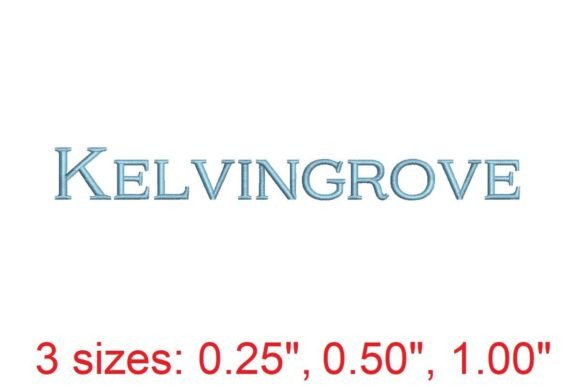
Opening up the Kelvingrove embroidery font file, the first thing that stands out is the clean, modern sans-serif style. It’s not overly decorative, which makes it instantly versatile for a range of projects. The letterforms feel balanced—neither too bold nor too delicate—so they should hold up well across different fabric types and project sizes. It’s the kind of font you’d reach for when you want a personalized touch without overpowering the design itself.
This font has a subtle elegance that leans more toward contemporary than vintage, making it ideal for modern apparel, boutique items, and clean-lined home goods. It’s not trying to be ornate, which is refreshing in a digital embroidery market often flooded with overly stylized fonts.
Real-Life Test: Custom Tote Bags for Back to School
I recently needed to create a set of personalized tote bags for a local school supply shop’s “Back to School” promotion. The goal was to offer parents a quick, high-quality personalization option without slowing down production. I opted for Kelvingrove to stitch out the kids’ names on 12-inch cotton canvas totes.
From a practical standpoint, the font stitched cleanly on my machine with no thread breaks or skipped stitches. The satin-stitched outlines were smooth, and even the tighter corners in letters like “E” and “R” held their shape well. The spacing between letters was consistent, which is crucial when you’re working with names of varying lengths.
Customers responded positively, especially appreciating how the font didn’t look too “cutesy” for older kids. It had just enough character to feel personal, but not so much that it felt gimmicky.
Performance Across Different Embroidery Applications
Kelvingrove’s strength lies in its adaptability. Here’s how it performed across several real-world embroidery uses:
- Custom Apparel: On a set of sweatshirts, the font scaled beautifully. Even at larger sizes, the stitch density remained even, and there was no puckering on the knit fabric.
- Baby Embroidery: For a line of personalized burp cloths, the font’s clarity made it easy to read tiny names without looking crowded.
- Embroidered Patches: When stitched out as standalone patches, the font held its detail well, especially around the satin-stitched edges.
- Holiday Gifts: Used on tea towels and pillow covers for holiday markets, it gave a polished, handmade look that Etsy shoppers tend to gravitate toward.
Where to Use Kelvingrove with Caution
While Kelvingrove is a solid performer, there are a few situations where you’ll want to test carefully before committing:
- Small Hoop Sizes: The font loses clarity when scaled down too much. If you're working with a 4x4 hoop and want to stitch out a full name, you may need to shorten it or reduce the font size carefully.
- Textured or Stretchy Fabrics: On fleece or stretchy cotton blends, I noticed slight distortion in the finer lines. Using a lightweight cutaway stabilizer helped maintain the font’s integrity.
- Dark Fabric Backgrounds: I tested the design in white thread on black tote fabric, and while the contrast was strong, the satin edges did show a bit of shadowing. It wasn’t a dealbreaker, but something to consider for high-end mockups.
- Curved Surfaces (like caps): Stitching names on curved cap panels required repositioning the hoop and using a bobbler stabilizer to prevent shifting. The font itself held up fine—it’s the application that needs extra care.
How Kelvingrove Impacts the Final Product
As a designer and small business owner, I care about more than just how a font stitches out—I care how it affects the customer experience. Kelvingrove adds a quiet professionalism to finished items. It doesn’t scream “handmade” in a way that feels amateurish. Instead, it whispers “thoughtful detail,” which is exactly what buyers of custom goods are looking for.
When used on Etsy product mockups, the font looked crisp and high-quality, which helped boost buyer confidence. On actual garments, it contributed to a more cohesive brand feel—especially when used across multiple product lines like baby bibs, tote bags, and personalized hoodies.
It also plays well with other design elements. I paired it with simple applique accents and fill-stitched borders, and it never got lost in the mix. That’s a big plus for digital product sellers who bundle fonts with other embroidery files.
Designer Notes: Practical Tips Before You Stitch
Here’s what I recommend based on my real-world use of Kelvingrove:
- Test on scrap fabric first: Always a good idea, but especially important if you’re using a new stabilizer or unfamiliar fabric.
- Check thread color contrast: Especially on darker backgrounds, test how the satin edges read before stitching a final piece.
- Review stitch density: The design is well-balanced, but if you're using it at larger sizes, double-check for overly dense areas that might pucker fabric.
- Confirm hoop size compatibility: If you’re working with a smaller hoop, plan ahead for names or phrases that might need resizing.
- Inspect small details: Letters like “i” and “l” are narrow, so make sure they stitch clearly on your chosen fabric.
- Test in black and white mockups: This helps you see how the font will look without color distractions.
- Use proper stabilizer: Light to medium-weight tear-away works well for most fabrics, but switch to cutaway for stretchy materials.
- Confirm licensing: Since this is a commercial embroidery file, always double-check the license terms before selling finished items or bundling in digital kits.
Final Thoughts: A Reliable Font for Real-World Projects
Kelvingrove isn’t trying to be the flashiest embroidery font on the market—and that’s exactly why it works so well. It’s a dependable, clean, and readable font that stitches out consistently across a wide range of applications. Whether you’re an Etsy seller, small shop owner, or a craft business looking to elevate your product line, this is one of those embroidery files that will quietly become a go-to in your collection.
It’s not just about how it stitches—it’s about how it looks in use, how it reads on a garment, and how it contributes to the overall professionalism of your handmade items. Kelvingrove delivers on all fronts, and that’s why I’ll be reaching for it again and again.